
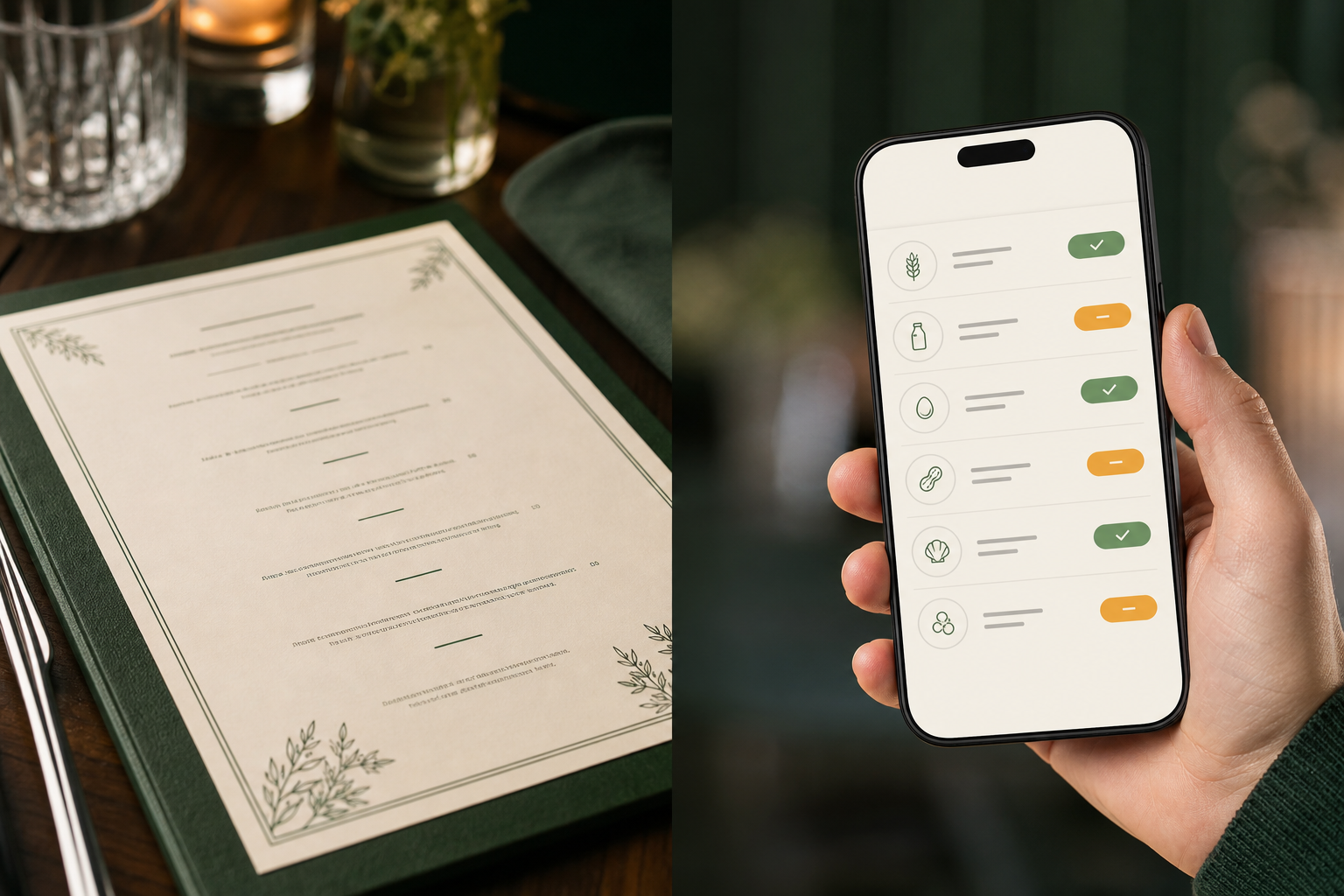
A restaurant menu allergen checker is any tool — paper notes, a spreadsheet, or an app — that helps you map dishes to your food allergies before you order. The goal isn’t to replace the kitchen. It’s to shrink a 40-item menu into a shortlist you can verify with staff.
Why reading the menu alone falls short
Menus are marketing copy. They highlight flavors, not cross-contact. Words like “crispy,” “creamy,” or “house sauce” can hide dairy, gluten, peanut, or shellfish. Under time pressure, people miss lines on page two — or trust a waiter who is guessing.
What a good allergen menu checker includes
1. Your personal allergen list
Peanut, dairy, gluten, and shellfish are common starting points. Custom items matter too (sesame, soy, tree nuts, eggs). The checker should use your list, not a generic “common 9” only.
2. Dish-level calls, not a wall of text
The most useful labels for dining out are simple:
- Safe — no obvious match to your allergens in the menu text
- Ask kitchen — possible risk, unclear prep, or shared equipment language
- Avoid — clear allergen match on the description
3. Speed at the table
Photographing the menu beats typing every dish. That’s why AllerPlate is built as a camera-first food allergy menu scanner for iPhone and Android.
What a checker cannot do
No app can guarantee a dish is safe. Recipes change. Fryers are shared. Menus omit ingredients. A checker is a filter — then you confirm. Treat results as estimates, never as medical advice.
How to use one on a real night out
- Set allergens before you leave home
- Scan starters, mains, and desserts separately if the menu is long
- Pick 2–3 Safe or Ask kitchen options
- Ask staff precise questions about those dishes only
Try AllerPlate as your menu allergen checker
Scan any restaurant menu and see Safe, Ask kitchen, or Avoid for the allergens you care about — then confirm with the kitchen before you eat.