
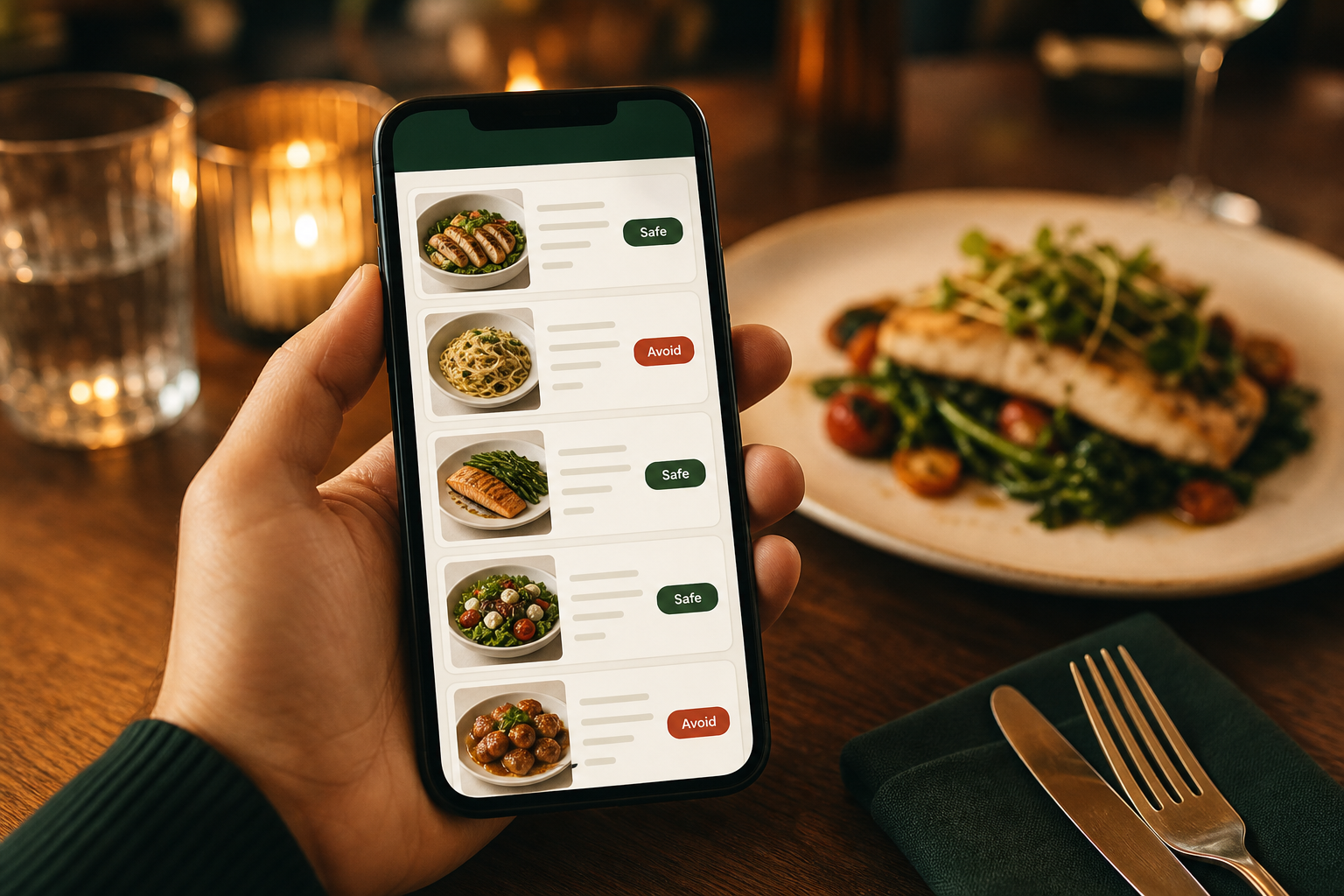
Eating out with a peanut allergy is stressful for a reason: peanuts hide in sauces, dressings, desserts, and shared fryers — not just in dishes named “peanut.” This guide covers a simple restaurant routine you can repeat anywhere, plus how a food allergy menu scanner like AllerPlate can speed up the “what can I eat?” moment.
1. Decide your risk rules before you sit down
Everyone’s threshold is different. Before you open the menu, be clear with yourself (and anyone ordering for you) about:
- Whether peanut oil is a hard no for you
- Whether shared fryers or woks are acceptable
- Whether “may contain” / facility warnings are automatic Avoids
Writing those rules into an allergen profile (in AllerPlate or a notes app) keeps you from renegotiating under pressure when the waiter is waiting.
2. Scan the menu for peanut red flags
Look past the entrée title. Common peanut risk language includes:
- Satay, pad Thai, kung pao, mole, African groundnut stews
- Peanut sauce, satay glaze, crushed peanuts, peanut brittle
- “Asian-inspired” dressings and some pesto variations
- Bakery desserts and ice cream toppings
Also watch for dishes that don’t say peanut but often use it in the kitchen — fried appetizers, blended sauces, and “chef’s special” items with no ingredient list.
3. Ask the kitchen specific questions
Vague questions get vague answers. Better asks:
- “Does this dish contain peanut or peanut oil?”
- “Is the fryer or wok shared with peanut items?”
- “Can the kitchen prepare this without peanut sauce on the line?”
If staff are unsure, treat that as an Ask kitchen moment — or Avoid if your reaction risk is high. Confidence from the kitchen matters more than a friendly guess from the front of house.
4. Use a menu allergen checker when the list is long
On a multi-page dinner menu, scanning by eye is slow. An app like AllerPlate lets you photograph the menu and flag dishes for peanut (and other allergens) as Safe, Ask kitchen, or Avoid so you can narrow choices fast — then still confirm with staff before you eat.
5. Keep a backup plan
If the kitchen can’t confirm, skip that restaurant without guilt. Carry your emergency medication, tell dining companions your plan, and prefer places that take allergies seriously on the first ask.
Scan menus for peanut risk on your phone
AllerPlate is built for allergy-first dining — not fitness macros. Set peanut (and custom allergens), scan the menu, and see clear dish labels before you order.