
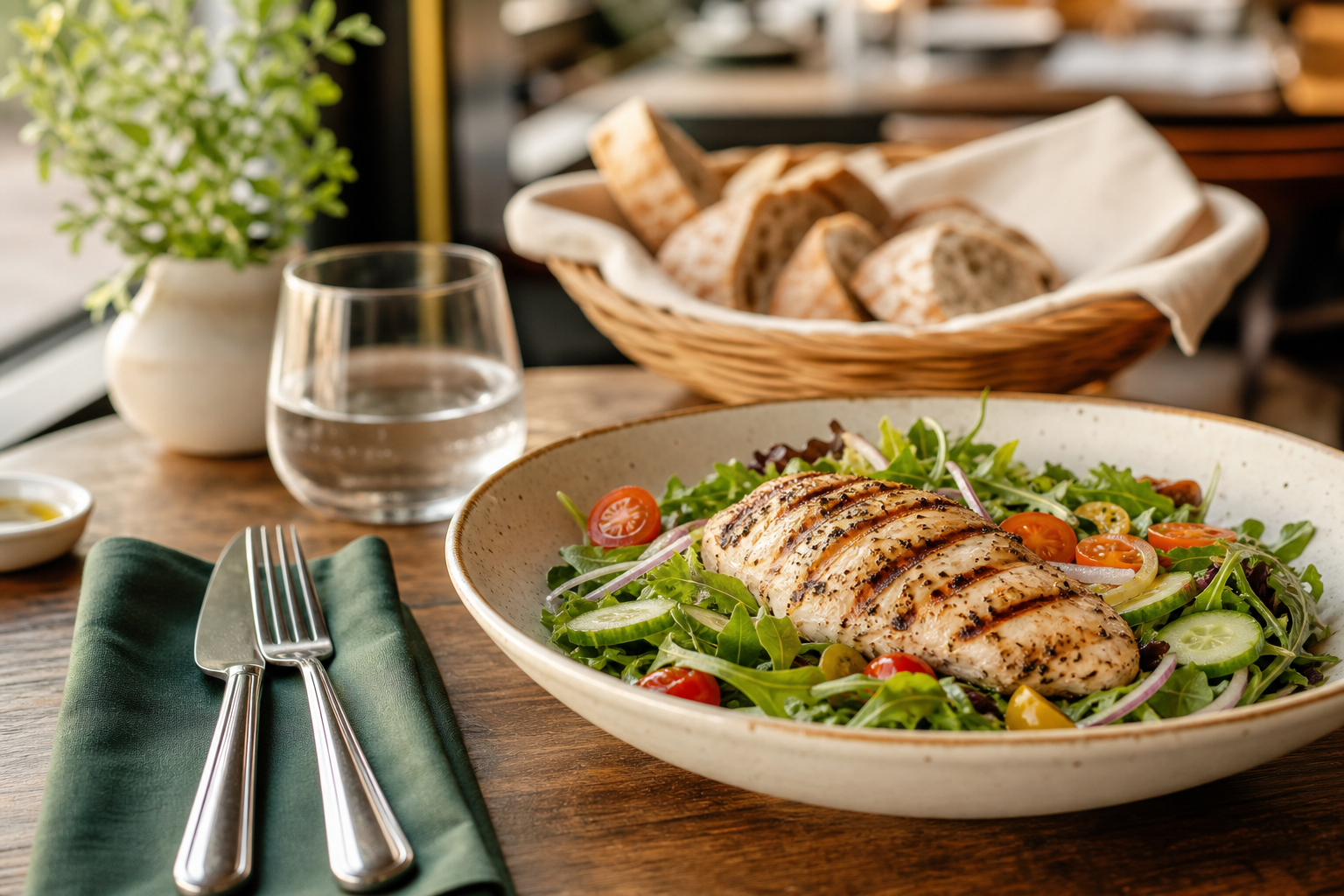
Dining out with a gluten allergy (or celiac disease) means watching for wheat, barley, rye, and contamination — not only bread baskets. These gluten allergy dining tips help you read restaurant menus faster and know when to ask the kitchen.
Note: This is educational, not medical advice. Severity and safe thresholds vary. Follow your clinician’s guidance.
Hidden gluten that menus often skip
- Soy sauce, marinades, and “house seasoning”
- Fried coatings, tempura, and shared fryers
- Thickeners in soups, gravies, and cream sauces
- Croutons, dumpling wrappers, and flour-dusted proteins
- Beer-battered items and malt vinegar
“Gluten-friendly” on a menu is not the same as a dedicated gluten-free kitchen. Treat ambiguous wording as Ask kitchen.
Questions that get better answers
- “Is this dish gluten-free, including sauces and marinades?”
- “Is the fryer shared with breaded items?”
- “Can you grill this on a clean surface without flour?”
Build a shortlist before you order
On long menus, start with naturally simpler plates (grilled proteins, steamed vegetables, plain rice) and verify sauces separately. A menu allergen checker like AllerPlate can flag gluten-related wording across the menu so you spend time confirming the right dishes — not reading every line twice.
When to walk away
If staff cannot explain ingredients, or the kitchen seems dismissive, choose another place. For many people with gluten allergy or celiac disease, uncertainty is not worth the meal.
Flag gluten on any menu with AllerPlate
Set gluten (and other allergens), scan the restaurant menu on your phone, and see Safe, Ask kitchen, or Avoid — then confirm with staff.